| DATE/TIME | REGION | MAGNITUDE | DEPTH (in km) | SOURCE | DETAIL | ||
| Monday April 16 2012, 21:13:40 UTC | -16552 seconds ago | Central Alaska | 1.2 | 11.8 | USGS Feed | Detail | |
| Monday April 16 2012, 20:52:23 UTC | -15275 seconds ago | Northern California | 1.0 | 2.7 | USGS Feed | Detail | |
| Monday April 16 2012, 20:46:00 UTC | -14892 seconds ago | Southern Greece | 2.6 | 21.0 | CSEM-EMSC Feed | Detail | |
| Monday April 16 2012, 20:45:32 UTC | -14864 seconds ago | Dodecanese Islands, Greece | 2.7 | 10.0 | CSEM-EMSC Feed | Detail | |
| Monday April 16 2012, 20:39:12 UTC | -14484 seconds ago | Southern California | 1.3 | 11.1 | USGS Feed | Detail | |
| Monday April 16 2012, 20:26:07 UTC | -13699 seconds ago | Puerto Rico region | 3.3 | 51.0 | USGS Feed | Detail | |
| Monday April 16 2012, 20:16:43 UTC | -13135 seconds ago | Vanuatu | 4.8 | 105.0 | CSEM-EMSC Feed | Detail | |
| Monday April 16 2012, 20:16:40 UTC | -13132 seconds ago | Vanuatu Islands, New Hebrides Islands. | 5.1 | 60.0 | GeoScience Australia | Detail | |
| Monday April 16 2012, 20:15:29 UTC | -13061 seconds ago | Northern California | 1.4 | 2.5 | USGS Feed | Detail | |
| Monday April 16 2012, 20:13:25 UTC | -12937 seconds ago | Northern California | 1.0 | 2.6 | USGS Feed | Detail | |
| Monday April 16 2012, 20:03:36 UTC | -12348 seconds ago | Central Alaska | 1.1 | 38.2 | USGS Feed | Detail | |
| Monday April 16 2012, 20:01:54 UTC | -12246 seconds ago | Central Alaska | 1.1 | 6.7 | USGS Feed | Detail | |
| Monday April 16 2012, 20:01:54 UTC | -12246 seconds ago | Central Alaska | 1.1 | 6.7 | USGS Feed | Detail | |
| Monday April 16 2012, 19:58:52 UTC | -12064 seconds ago | Eastern Turkey | 3.0 | 2.0 | CSEM-EMSC Feed | Detail | |
| Monday April 16 2012, 19:46:37 UTC | -11329 seconds ago | Fox Islands, Aleutian Islands, Alaska | 2.8 | 169.5 | USGS Feed | Detail | |
| Monday April 16 2012, 19:39:52 UTC | -10924 seconds ago | Virgin Islands region | 2.7 | 55.5 | USGS Feed | Detail | |
| Monday April 16 2012, 19:39:49 UTC | -10921 seconds ago | Southern California | 1.0 | 11.6 | USGS Feed | Detail | |
| Monday April 16 2012, 19:28:00 UTC | -10212 seconds ago | 10 km east of Christchurch | 3.2 | 10.0 | NZ GeoNet | Detail | |
| Monday April 16 2012, 19:09:55 UTC | -9127 seconds ago | Southern Greece | 3.2 | 10.0 | CSEM-EMSC Feed | Detail | |
| Monday April 16 2012, 19:07:19 UTC | -8971 seconds ago | Northern California | 1.1 | 3.3 | USGS Feed | Detail | |
| Monday April 16 2012, 19:05:12 UTC | -8844 seconds ago | Western Turkey | 2.8 | 5.0 | CSEM-EMSC Feed | Detail | |
| Monday April 16 2012, 18:59:38 UTC | -8510 seconds ago | Western Turkey | 2.6 | 6.0 | CSEM-EMSC Feed | Detail | |
| Monday April 16 2012, 18:52:00 UTC | -8052 seconds ago | 20 km south-east of Rotorua | 1.7 | 15.0 | NZ GeoNet | Detail | |
| Monday April 16 2012, 18:47:31 UTC | -7783 seconds ago | Central Alaska | 2.0 | 0.1 | USGS Feed | Detail | |
| Monday April 16 2012, 18:47:30 UTC | -7782 seconds ago | Central Alaska | 1.8 | 0.4 | USGS Feed | Detail | |
| Monday April 16 2012, 18:46:33 UTC | -7725 seconds ago | Western Turkey | 3.1 | 8.0 | CSEM-EMSC Feed | Detail | |
| Monday April 16 2012, 18:36:00 UTC | -7092 seconds ago | 30 km north-west of Taupo | 5.0 | 150.0 | NZ GeoNet | Detail | |
| Monday April 16 2012, 18:31:59 UTC | -6851 seconds ago | Kenai Peninsula, Alaska | 2.1 | 68.2 | USGS Feed | Detail | |
| Monday April 16 2012, 18:08:25 UTC | -5437 seconds ago | Eastern Turkey | 2.3 | 5.0 | CSEM-EMSC Feed | Detail | |
| Monday April 16 2012, 18:06:22 UTC | -5314 seconds ago | Eastern Turkey | 1.9 | 5.0 | CSEM-EMSC Feed | Detail | |
| Monday April 16 2012, 18:04:06 UTC | -5178 seconds ago | Island of Hawaii, Hawaii | 2.1 | 0.0 | USGS Feed | Detail | |
| Monday April 16 2012, 18:03:32 UTC | -5144 seconds ago | Western Turkey | 3.0 | 5.0 | CSEM-EMSC Feed | Detail | |
| Monday April 16 2012, 18:01:19 UTC | -5011 seconds ago | Sulawesi, Indonesia | 5.2 | 40.0 | CSEM-EMSC Feed | Detail | |
| Monday April 16 2012, 18:01:15 UTC | -5007 seconds ago | Sulawesi, Indonesia. | 5.4 | 4.0 | GeoScience Australia | Detail | |
| Monday April 16 2012, 17:52:35 UTC | -4487 seconds ago | Northern California | 1.1 | 3.3 | USGS Feed | Detail | |
| Monday April 16 2012, 17:38:43 UTC | -3655 seconds ago | Central California | 2.1 | 5.4 | USGS Feed | Detail | |
| Monday April 16 2012, 17:35:41 UTC | -3473 seconds ago | Northern California | 1.2 | 3.0 | USGS Feed | Detail | |
| Monday April 16 2012, 17:35:41 UTC | -3473 seconds ago | Northern California | 1.2 | 3.0 | USGS Feed | Detail | |
| Monday April 16 2012, 17:30:31 UTC | -3163 seconds ago | Northern California | 1.1 | 0.0 | USGS Feed | Detail | |
| Monday April 16 2012, 17:25:12 UTC | -2844 seconds ago | Northern California | 1.5 | 2.6 | USGS Feed | Detail | |
| Monday April 16 2012, 17:22:12 UTC | -2664 seconds ago | Southern California | 1.4 | 16.4 | USGS Feed | Detail | |
| Monday April 16 2012, 17:18:13 UTC | -2425 seconds ago | Nevada | 1.1 | 1.0 | USGS Feed | Detail | |
| Monday April 16 2012, 17:13:03 UTC | -2115 seconds ago | Central Alaska | 1.8 | 90.0 | USGS Feed | Detail | |
| Monday April 16 2012, 17:06:39 UTC | -1731 seconds ago | Central Alaska | 2.4 | 127.0 | USGS Feed | Detail | |
| Monday April 16 2012, 17:04:24 UTC | -1596 seconds ago | Southwestern Siberia, Russia | 4.2 | 10.0 | CSEM-EMSC Feed | Detail | |
| Monday April 16 2012, 17:02:59 UTC | -1511 seconds ago | Komandorskiye Ostrova Region | 4.6 | 10.0 | CSEM-EMSC Feed | Detail | |
| Monday April 16 2012, 16:55:11 UTC | -1043 seconds ago | Molucca Sea | 4.4 | 39.0 | CSEM-EMSC Feed | Detail | |
| Monday April 16 2012, 16:55:11 UTC | -1043 seconds ago | Molucca Sea | 4.4 | 38.6 | USGS Feed | Detail | |
| Monday April 16 2012, 16:54:48 UTC | -1020 seconds ago | Northern California | 1.2 | 2.3 | USGS Feed | Detail | |
| Monday April 16 2012, 16:53:37 UTC | -949 seconds ago | Southern California | 1.6 | 11.6 | USGS Feed | Detail | |
| Monday April 16 2012, 16:43:11 UTC | -323 seconds ago | Central Alaska | 1.0 | 16.4 | USGS Feed | Detail | |
| Monday April 16 2012, 16:40:54 UTC | -186 seconds ago | Western Turkey | 2.0 | 9.0 | CSEM-EMSC Feed | Detail | |
| Monday April 16 2012, 16:39:10 UTC | -82 seconds ago | Romania | 3.7 | 149.0 | CSEM-EMSC Feed | Detail | |
| Monday April 16 2012, 16:36:46 UTC | 62 seconds ago | Western Turkey | 2.3 | 5.0 | CSEM-EMSC Feed | Detail | |
| Monday April 16 2012, 16:26:11 UTC | 11 minutes ago | Central Alaska | 1.6 | 5.7 | USGS Feed | Detail | |
| Monday April 16 2012, 16:25:56 UTC | 11 minutes ago | Greater Los Angeles area, California | 1.6 | 7.0 | USGS Feed | Detail | |
| Monday April 16 2012, 16:13:14 UTC | 24 minutes ago | Western Turkey | 3.3 | 5.0 | CSEM-EMSC Feed | Detail | |
| Monday April 16 2012, 16:05:54 UTC | 31 minutes ago | Off W Coast Of Northern Sumatra | 5.1 | 10.0 | CSEM-EMSC Feed | Detail | |
| Monday April 16 2012, 16:05:53 UTC | 31 minutes ago | off the west coast of northern Sumatra | 5.2 | 10.0 | USGS Feed | Detail | |
| Monday April 16 2012, 16:05:52 UTC | 31 minutes ago | Off W Coast of Northern Sumatra. | 5.2 | 0.0 | GeoScience Australia | Detail | |
| Monday April 16 2012, 15:41:50 UTC | 55 minutes ago | Southern Greece | 2.9 | 5.0 | CSEM-EMSC Feed | Detail | |
| Monday April 16 2012, 15:39:31 UTC | 58 minutes ago | Southern California | 1.5 | 13.8 | USGS Feed | Detail | |
| Monday April 16 2012, 15:30:08 UTC | 67 minutes ago | Northern California | 1.3 | 3.2 | USGS Feed | Detail | |
| Monday April 16 2012, 15:28:15 UTC | 69 minutes ago | Southern California | 1.4 | 12.7 | USGS Feed | Detail | |
| Monday April 16 2012, 15:25:43 UTC | 72 minutes ago | Baja California, Mexico | 2.2 | 3.5 | USGS Feed | Detail | |
| Monday April 16 2012, 15:25:43 UTC | 72 minutes ago | Baja California, Mexico | 2.2 | 3.5 | USGS Feed | Detail | |
| Monday April 16 2012, 15:11:00 UTC | 86 minutes ago | 10 km south-west of Christchurch | 2.9 | 5.0 | NZ GeoNet | Detail | |
| Monday April 16 2012, 15:06:57 UTC | 90 minutes ago | Southern Greece | 4.7 | 30.0 | CSEM-EMSC Feed | Detail | |
| Monday April 16 2012, 15:06:54 UTC | 90 minutes ago | southern Greece | 4.8 | 40.7 | USGS Feed | Detail | |
| Monday April 16 2012, 14:39:43 UTC | 118 minutes ago | Alaska Peninsula | 1.5 | 10.0 | USGS Feed | Detail | |
| Monday April 16 2012, 14:39:32 UTC | 118 minutes ago | Central Turkey | 2.4 | 5.0 | CSEM-EMSC Feed | Detail | |
| Monday April 16 2012, 14:24:51 UTC | 2 hours ago | Western Turkey | 2.6 | 12.0 | CSEM-EMSC Feed | Detail | |
| Monday April 16 2012, 14:23:40 UTC | 2 hours ago | Eastern Turkey | 2.5 | 5.0 | CSEM-EMSC Feed | Detail | |
| Monday April 16 2012, 14:14:43 UTC | 2 hours ago | Central Alaska | 1.7 | 79.6 | USGS Feed | Detail | |
| Monday April 16 2012, 14:14:37 UTC | 2 hours ago | Aegean Sea | 2.8 | 5.0 | CSEM-EMSC Feed | Detail | |
| Monday April 16 2012, 14:12:27 UTC | 2 hours ago | Central Alaska | 1.6 | 0.0 | USGS Feed | Detail | |
| Monday April 16 2012, 14:04:47 UTC | 2 hours ago | Southern Alaska | 1.4 | 31.3 | USGS Feed | Detail | |
| Monday April 16 2012, 14:02:43 UTC | 2 hours ago | Western Turkey | 2.2 | 5.0 | CSEM-EMSC Feed | Detail | |
| Monday April 16 2012, 14:00:28 UTC | 2 hours ago | Western Turkey | 2.3 | 5.0 | CSEM-EMSC Feed | Detail | |
| Monday April 16 2012, 13:56:53 UTC | 2 hours ago | Central Turkey | 2.2 | 4.0 | CSEM-EMSC Feed | Detail | |
| Monday April 16 2012, 13:56:49 UTC | 2 hours ago | East Of Severnaya Zemlya | 4.2 | 10.0 | CSEM-EMSC Feed | Detail | |
| Monday April 16 2012, 13:53:52 UTC | 2 hours ago | Central Alaska | 1.7 | 64.1 | USGS Feed | Detail | |
| Monday April 16 2012, 13:44:17 UTC | 2 hours ago | Western Turkey | 2.8 | 3.0 | CSEM-EMSC Feed | Detail | |
| Monday April 16 2012, 13:43:29 UTC | 2 hours ago | Western Turkey | 2.8 | 5.0 | CSEM-EMSC Feed | Detail | |
| Monday April 16 2012, 13:28:21 UTC | 3 hours ago | Western Turkey | 2.3 | 5.0 | CSEM-EMSC Feed | Detail | |
| Monday April 16 2012, 13:24:57 UTC | 3 hours ago | Western Turkey | 2.2 | 8.0 | CSEM-EMSC Feed | Detail | |
| Monday April 16 2012, 13:23:01 UTC | 3 hours ago | Eastern Turkey | 2.8 | 5.0 | CSEM-EMSC Feed | Detail | |
| Monday April 16 2012, 13:21:56 UTC | 3 hours ago | Southern Greece | 2.9 | 5.0 | CSEM-EMSC Feed | Detail | |
| Monday April 16 2012, 13:19:22 UTC | 3 hours ago | Northern California | 1.4 | 2.3 | USGS Feed | Detail | |
| Monday April 16 2012, 13:10:32 UTC | 3 hours ago | Southern Alaska | 1.3 | 69.6 | USGS Feed | Detail | |
| Monday April 16 2012, 13:02:05 UTC | 3 hours ago | south of the Fiji Islands | 4.3 | 422.6 | USGS Feed | Detail | |
| Monday April 16 2012, 13:02:05 UTC | 3 hours ago | South Of Fiji Islands | 4.3 | 423.0 | CSEM-EMSC Feed | Detail | |
| Monday April 16 2012, 13:02:05 UTC | 3 hours ago | South Of Fiji Islands | 4.3 | 423.0 | CSEM-EMSC Feed | Detail | |
| Monday April 16 2012, 13:00:38 UTC | 3 hours ago | Western Turkey | 2.5 | 5.0 | CSEM-EMSC Feed | Detail | |
| Monday April 16 2012, 12:57:59 UTC | 3 hours ago | Southern California | 1.4 | 3.9 | USGS Feed | Detail | |
| Monday April 16 2012, 12:57:46 UTC | 3 hours ago | Off W Coast Of Northern Sumatra | 4.5 | 20.0 | CSEM-EMSC Feed | Detail | |
| Monday April 16 2012, 12:57:44 UTC | 3 hours ago | off the west coast of northern Sumatra | 4.2 | 14.4 | USGS Feed | Detail | |
| Monday April 16 2012, 12:56:37 UTC | 3 hours ago | Eastern Turkey | 2.6 | 9.0 | CSEM-EMSC Feed | Detail | |
| Monday April 16 2012, 12:55:36 UTC | 3 hours ago | Western Turkey | 2.1 | 8.0 | CSEM-EMSC Feed | Detail | |
| Monday April 16 2012, 12:47:59 UTC | 3 hours ago | Greece | 3.3 | 5.0 | CSEM-EMSC Feed | Detail | |
FAIR USE NOTICE
FAIR USE NOTICE:
These Videos may contain copyrighted (©) material the use of which has not always been specifically authorized by the copyright owner. Such material is made available to advance understanding of ecological, political, human rights, economic, democracy, scientific, moral, ethical, and social justice issues, etc. It is believed that this constitutes a 'fair use' of any such copyrighted material as provided for in section 107 of the US Copyright Law. In accordance with Title 17 U.S.C. Section 107, this material is distributed without profit to those who have expressed a prior general interest in receiving similar information for
research and educational purposes.
Monday, 16 April 2012
More Fracking Earthquakes Near Taupo......But The Government Has Declared Fracking To Be Safe ......What A Joke...
Rosneft, ExxonRussia Stunned After Japanese Plan to Evacuate 40 Million Revealed
circulating in the Kremlin today prepared by the Foreign Ministry on the planned re-opening of talks with Japan over the disputed Kuril Islands during the next fortnight states that Russian diplomats were “stunned” after being told by their Japanese counterparts that upwards of 40 million of their peoples were in “extreme danger” of life threatening radiation poisoning and could very well likely be faced with forced evacuations away from their countries eastern most located cities…including the world’s largest one, Tokyo.
The Kuril Islands are located in Russia's Sakhalin Oblast region and stretch approximately 1,300 km (810 miles) northeast from Hokkaidō, Japan, to Kamchatka, Russia, separating the Sea of Okhotsk from the North Pacific Ocean. There are 56 islands and many more minor rocks. It consists of Greater Kuril Ridge and Lesser Kuril Ridge, all of which were captured by Soviet Forces in the closing days of World War II from the Japanese.
The “extreme danger” facing tens of millions of the Japanese peoples is the result of the Fukushima Daiichi Nuclear Disaster that was a series of equipment failures, nuclear meltdowns, and releases of radioactive materials at the Fukushima I Nuclear Power Plant, following the Tōhoku earthquake and tsunami on 11 March 2011.
According to this report, Japanese diplomats have signaled to their Russian counterparts that the returning of the Kuril Islands to Japan is “critical” as they have no other place to resettle so many people that would, in essence, become the largest migration of human beings since the 1930’s when Soviet leader Stalin forced tens of millions to resettle Russia’s far eastern regions.
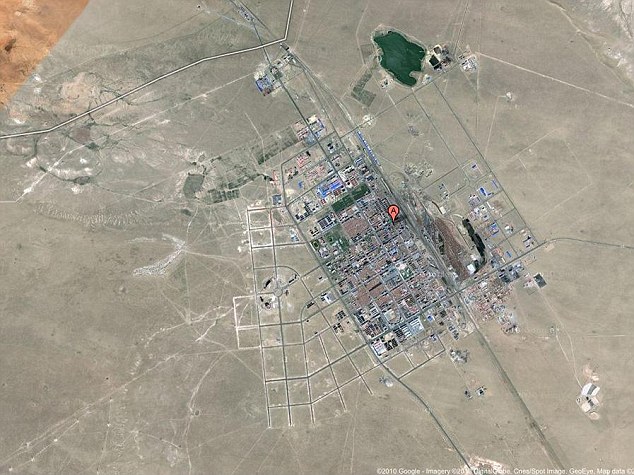
Important to note, this report continues, are that Japanese diplomats told their Russian counterparts that they were, also, “seriously considering” an offer by China to relocate tens of millions of their citizens to the Chinese mainland to inhabit what are called the “ghost cities,” built for reasons still unknown and described, in part, by London’s Daily Mail News Service in their 18 December 2010 article titled “The Ghost Towns Of China: Amazing Satellite Images Show Cities Meant To Be Home To Millions Lying Deserted” that says:
“These amazing satellite images show sprawling cities built in remote parts of China that have been left completely abandoned, sometimes years after their construction. Elaborate public buildings and open spaces are completely unused, with the exception of a few government vehicles near communist authority offices. Some estimates put the number of empty homes at as many as 64 million, with up to 20 new cities being built every year in the country's vast swathes of free land.”
Foreign Ministry experts in this report note that should Japan accept China’s offer, the combined power of these two Asian peoples would make them the largest super-power in human history with an economy larger than that of the United States and European Union combined and able to field a combined military force of over 200 million.
To how dire the situation is in Japan was recently articulated by Japanese diplomat Akio Matsumura who warned that the disaster at the Fukushima nuclear plant may ultimately turn into an event capable of extinguishing all life on Earth.
According to the Infowars.Com News Service: “Matsumura posted [this] startling entry on his blog following a statement made by Japan’s former ambassador to Switzerland, Mitsuhei Murata, on the situation at Fukushima.
Speaking at a public hearing of the Budgetary Committee of the House of Councilors on 22 March 2012, Murata warned that “if the crippled building of reactor unit 4 – with 1,535 fuel rods in the spent fuel pool 100 feet (30 meters) above the ground – collapses, not only will it cause a shutdown of all six reactors but will also affect the common spent fuel pool containing 6,375 fuel rods, located some 50 meters from reactor 4,” writes Matsumura.
In both cases the radioactive rods are not protected by a containment vessel; dangerously, they are open to the air. This would certainly cause a global catastrophe like we have never before experienced. He stressed that the responsibility of Japan to the rest of the world is immeasurable. Such a catastrophe would affect us all for centuries. Ambassador Murata informed us that the total numbers of the spent fuel rods at the Fukushima Daiichi site excluding the rods in the pressure vessel is 11,421.”
Disturbingly, the desperate situation facing Japan is, also, facing the United States as Russian military observers overflying the US this week as part of the Open Skies Treaty are reporting “unprecedented” amounts of radiation in the Western regions of that country, a finding that was further confirmed by scientists with the Woods Hole Oceanographic Institute who have confirmed that a wave of highly radioactive waste is headed directly for the US west coast.
Important to note is that this new wave of Fukushima radiation headed towards the US is in addition to earlier radiation events that American scientists are now blaming for radioactive particles from Japan being detected in California kelp.
Though the news of this ongoing global catastrophe is still being heavily censored in the US, the same cannot be said about Japan, and as recently reported by the leading Japanese newspaper The Mainichi Daily News that reports:
“One of the biggest issues that we face is the possibility that the spent nuclear fuel pool of the No. 4 reactor at the stricken Fukushima No. 1 Nuclear Power Plant will collapse. This is something that experts from both within and outside Japan have pointed out since the massive quake struck. TEPCO, meanwhile, says that the situation is under control. However, not only independent experts, but also sources within the government say that it’s a grave concern.
The storage pool in the No. 4 reactor building has a total of 1,535 fuel rods, or 460 tons of nuclear fuel, in it. The 7-story building itself has suffered great damage, with the storage pool barely intact on the building’s third and fourth floors. The roof has been blown away. If the storage pool breaks and runs dry, the nuclear fuel inside will overheat and explode, causing a massive amount of radioactive substances to spread over a wide area. Both the U.S. Nuclear Regulatory Commission (NRC) and French nuclear energy company Areva have warned about this risk.
A report released in February by the Independent Investigation Commission on the Fukushima Daiichi Nuclear Accident stated that the storage pool of the plant’s No. 4 reactor has clearly been shown to be “the weakest link” in the parallel, chain-reaction crises of the nuclear disaster. The worse-case scenario drawn up by the government includes not only the collapse of the No. 4 reactor pool, but the disintegration of spent fuel rods from all the plant’s other reactors. If this were to happen, residents in the Tokyo metropolitan area would be forced to evacuate.”
Even though this crisis in Japan has been described as “a nuclear war without a war,” and the US Military is being reported is now stocking up on massive amounts of anti-radiation pills in preparation for nuclear fallout, there remains no evidence at all the ordinary peoples are being warned about this danger in any way whatsoever.
The ghost towns of China: Amazing satellite images show cities meant to be home to millions lying deserted
These amazing satellite images show sprawling cities built in remote parts of China that have been left completely abandoned, sometimes years after their construction.
Elaborate public buildings and open spaces are completely unused, with the exception of a few government vehicles near communist authority offices.
Some estimates put the number of empty homes at as many as 64 million, with up to 20 new cities being built every year in the country's vast swathes of free land.
The photographs have emerged as a Chinese government think tank warns that the country's real estate bubble is getting worse, with property prices in major cities overvalued by as much as 70 per cent.
Of the 35 major cities surveyed, property prices in eleven including Beijing and Shanghai were between 30 and 50 per cent above their market value, the China Daily said, citing the Chinese Academy of Social Sciences.
Prices in Fuzhou, capital of the southeastern province of Fujian, had the worst property bubble with average house prices more than 70 per cent higher than their market value, according to the survey conducted in September.
The average price in the 35 cities surveyed was nearly 30 per cent above the market value, the report said.
Property prices have remained stubbornly high despite the government adopting a slew of measures since April including hiking minimum downpayments to at least 30 per cent and ordering banks not to provide loans for third home purchases.
Prices in 70 major cities were up 0.2 per cent in October from the previous month and 8.6 percent higher than a year ago, official data showed.
The increase came after prices gained 0.5 per cent month on month in September, which was the first increase since May.
Massive stimulus measures taken since 2008 to fend off the financial crisis injected huge amounts of liquidity in the market and have been blamed for fuelling real estate prices.
'The government target is not clear and policy is incoherent,' CASS senior research Ni Pengfei was quoted saying.
According to research carried out by Time magazine, fixed-asset investment in the Asian country accounted for more than 90 per cent of its overall growth - with residential and commercial real estate investment making up nearly a quarter of that.
Regional governments across China have been building massive real estate projects, including Kangbashi in Inner Mongolia and Zhengzhou New District, which have remained empty, because of the high prices and interest in investment.
Kangbashi, which was built in just five years, was meant to be the urban centre for Ordos City - a wealthy coal-mining hub home to 1.5million people.
It was filled with office towers, administrative centres, museums, theatres and sports facilities as well as thousands of homes, but remains virtually deserted.
Prices have continued to soar, investors have increasingly turned to property speculation fuelling the continued bubble.
The onset of the 2008 global recession was the bursting of the real estate bubble in the U.S. and experts fear a similar situation in China could prove catastrophic for still struggling economies and banking systems.
Beijing has introduced measures to cool 'ridiculous' property prices, but the risks of a crash mean the campaign is unlikely to ease up in the next year.
Public discontent has been fuelled by high prices in China's cities and the measures, introduced in April, have made it more difficult for speculators and developers to hoard land and chase up prices as lending has been restricted.
Wang Shi, chairman of China Vanke - the country's largest property developer - said: 'Tightening measures will not loosen next year.
'If we can control the pace of property price gains within a reasonable range, it's already an achievement.'
Property sales for Vanke already exceeded $15billion so far this year, but Mr Shi has insisted China will not end up in a worse place than Dubai - where a property price bubble imploded during the global financial crisis.
He said: 'It could be really, really bad without the government stepping in.
'If the bubble bursts, Japan's past will be China's present.'
But short-seller Jim Chanos has issued a more dire warning, and said he expected China's economy to implode in a real estate bust.
He said the country was 'on an economic treadmill to hell' and the country's bubble was 'Dubai times 1,000'.
In the 1980s, Tokyo saw a massive rise in property prices and a subsequent crash. The Hong Kong property market experienced a similar phenomenon in the 1990s.
Rosneft, Exxon Mobil sign landmark deal to develop Arctic reserves..
Rosneft and Exxon Mobil have signed a partnership deal, which will see them work together to develop the Arctic's rich untapped reserves.
The deal also hands Russia's top oil firm access to projects in North America developed by Exxon.
Contracts creating two operating companies to develop projects in the Kara and Black Seas, worth around $1bn were signed by Rosneft president Eduard Khudainatov and Exxon Mobil CEO Rex Tillerson in the presence of Russia’s president-elect Vladmir Putin.
Russian Deputy PM & former Rosneft Chairman Igor Sechin told media that at least 15 sea platforms would be built on the Arctic Kara Sea. “The drilling process will be very complex and will require significant investment. Preliminary estimates put the Kara sea investment at up to $300 bln. Under the Black Sea exploration deal drilling is expected to start in 2015 and will require injections of up to $55 bln. Investments into other projects is still to be defined”.
Sechin estimates Kara Sea deposit reserves at about 4.9 billion tons of oil and 8.3 trillion of cubic meters of gas. The Black Sea shelf deposit reserves are estimated at 1.2 billion tons of oil.
Vladimir Rozhankovsky, Head of Research at Nord Capital in Moscow, however, says it’s too early to call the agreements game-changers. “It’s just a number of framework deals, which I believe will become a full-scale cooperation deals not until we know the name of the next US president. Politics is weighing on such big deals a lot. I don’t think real joint exploration will kick-off any time soon, as the US is still treating its Russian partners with a shade of caution.”
Under a separate deal Rosneft will gain 30% stakes in three Exxon Mobil projects in the US, the Gulf of Mexico and Canada.
Rosneft & Exxon Mobil also inked an agreement to study development of difficult to reach oil reserves (Achimovka and Tyumen layers) in Western Siberia which Rosneft estimates at about 1.7 billion tonnes.
Sechin also mentioned last week’s decree lifting all export duties for new projects in the Аrctic shelf to boost investment into the area. It’s estimated that the Arctic may contain 20 percent of the world's oil and gas reserves, though the reserves are notoriously hard to reach and present huge environmental challenges.
“The huge Arctic deposit may contain up to 70% of Russia’s reserves. Exxon Mobil is a strong partner, which can offer Russia its shelf exploration expertise and technical facilitation. In turn it is likely to seek no less than a 49% stake in the joint venture, with Rosneft of course preserving the 51% blocking stake,” continues Rozhankovsky.
Rosneft had tried to partner up with BP last year, but it fell through as the British oil major became entangled in a legal battle with its existing Russian partners TNK-BP.
Sunday, 15 April 2012
Syria vows to fight ‘escalated terrorist attacks’ as first UN observers arrive.
The Syrian army pledged to continue fighting armed rebels in anticipation of the arrival of a team of UN observers, as “armed terrorists” have “hysterically escalated” their attacks following the official halt of all military operations.
The first six observers arrived in Damascus late Sunday, a UN spokesman said. The other 24 are expected to follow in the coming day.
The observers will be monitoring the shaky ceasefire that came into force on Thursday. Aggressions against civilians, army personnel, military checkpoints and private and public properties have all escalated since then, a Syrian military source says. The onslaught came “in conjunction with the UNSC resolution to send international observers to monitor the [ceasefire],” the official SANA news agency reported on Sunday.
"Out of their duty to protect the security of the homeland and citizens, the authorities will prevent these armed terrorist groups from continuing their criminal aggressions and acts of killings,” the source said.
Over the last few days, dozens of ceasefire violations have been reported from both sides. Opposition activists said that Syrian government shelled the city of Homs on Sunday, claiming at least three people were killed in the attack.
Referring to the latest violence, UN chief Ban Ki-moon said he was “very much concerned about what has happened” in Syria since the UNSC adopted Resolution 2042 on sending a mission of unarmed UN observers to the troubled country.
Meanwhile, an advance team of UN observers comprised of six monitors is due to arrive to Syria on Sunday evening.
They will be “on the ground in blue helmets tomorrow,” said Annan’s spokesman Ahmad Fawzi. “They will be quickly augmented by up to 25 to 30 from the region and elsewhere.”
The team was dispatched to Syria as soon as the UN Security Council unanimously approved the advance mission on Saturday. The observers are tasked with establishing and maintaining contact with both sides of the conflict, and reporting on ceasefire compliance until a full mission is deployed. The UNSC is expected to approve a full scale observer mission of about 250 people next week.
Kamel Wazne, a political analyst in Beirut believes that the whole peace initiative is now under threat. And that is not because the Syrian authorities or the rebels oppose the peace, he said, but because Syria’s neighbors like Qatar and Saudi Arabia would very much like to see the bloodshed to continue.
“Probably, we have seen and witnessed, in the past couple days, a major unrest from other terrorist organizations entering from Arab countries into Syria and causing all this havoc against the stability of Syria,” he explained. “Today was a major escalation, an attack and a lot of assassinations by the opposition against civilians and Syrian officials, mostly military men. And this is happening more often now then before.”
UN Security Council members met behind closed doors Friday to discuss a draft resolution that would allow an observer mission to be dispatched to Syria “as soon as possible,” as requested by Kofi Annan
.
Russia’s UN envoy Vitaly Churkin admitted that “it is crucial for the monitors to be on the ground” in Syria. He said however that more negotiation would be needed over the draft resolution, as the text was longer and more complicated than expected.
An advance team of UN observers is "standing by to board planes and get themselves on the ground as soon as possible," Annan's spokesman Ahmad Fawzi said Friday. The team is waiting for a UN Security Council go-ahead, which was expected come later on Friday.
The full UN mission is to include 250 monitors. It will be deployed “if the ceasefire holds and it turns into a genuine cessation of hostilities," Fawzi said.
Despite the fact that the Syrian army put on hold a crackdown on armed rebels, clashes continued on Friday as thousands of protesters took to the streets upon the Syrian National Council’s call for mass rallies. During the day the country saw sporadic outbursts of violence, with the spokesperson for UN envoy Kofi Annan calling the ceasefire "relatively respected."
One confrontation took place on the outskirts of the northwestern village of Khirbel el-Joz, on the border with Turkey, according to the Britain-based Syrian Observatory for Human Rights. The group also says the Syrian army deployed tanks to the area before the clash.
The report comes just a day after the UN-brokered ceasefire was implemented as a step towards bringing the government and rebel groups to the negotiating table. The truce remains shaky at best. Damascus complained that it will uphold its part of the bargain, even though the opposition refuses to guarantee that it will do so.
Turkey has a strategy to shelter “terrorist groups that enter Syrian territories, attack civilians and destroy the infrastructure,” Muallem said in a letter addressed to the UN Secretary-General Ban Ki-moon.
He said Turkey was harboring terrorist and turning a blind eye to the attacks they launch across the border to “terrorize civilians at the borders and force them to flee into Turkey so as to create a refugees’ crisis and then request human corridors and a buffer zone be implemented.”
The accusations came in response to Turkey accusing Syria of violating its sovereignty by opening fire across the border at a refugee camp. The Monday shootout left two Syrian nationals dead and some two dozen people wounded, including a Turkish aid worker.
Turkish Prime Minister Recep Tayyip Erdogan threatened that as a member of NATO Turkey would request military help from other members of the alliance.
There are estimated 24,000 Syrian refugees living in camps in Turkey. Some observers say the camps are used by many armed opposition members to take rest, receive medical treatment and re-arm before returning to Syria to fight against the government.
The United Nations Security Council has unanimously agreed to send an initial team of unarmed truce observers to Syria.
The resolution, which authorises the dispatch of an advance team of up to 30 unarmed military observers to Syria to monitor compliance with the ceasefire agreement, passed 15-0.
The observers will be tasked with establishing and maintaining contact with both sides of the conflict, and reporting on ceasefire compliance until a full mission is deployed in the country.
"I will make sure that this advance observer mission will be dispatched as soon as possible and try to make concrete proposals by the 18th of April for an official observer mission," UN Secretary-General Ban Ki-moon said.
A spokesman for international envoy Kofi Annan said on Saturday that an advance team of six monitors would arrive in Syria within 24 hours and deploy within 36 hours.
It will be followed by a larger contingent of up to 250 once the situation has stabilised.
The resolution also calls on both sides to immediately ‘cease all armed violence in all its forms’ and for the Syrian government to implement the demand by Kofi Annan to pull troops and heavy weapons out of cities and towns.
It’s the first resolution on Syria the 15-nation Council managed to approve unanimously since the uprising against President Assad erupted in March 2011.
Russia, which has previously vetoed 2 resolutions on Syria, showed satisfaction with the latest document, based on the 6-point plan, worked out by UN-Arab League peace envoy Annan.
The plan was aimed at stopping the violence in Syria which has taken the lives of 9,000 people, according to the UN.
Russian UN Ambassador Vitaly Churkin said Moscow has always supported Annan's peace plan, and that the unanimous decision made by the UNSC reflects constructive work done by its members.
"Under the influence of Russia and a number of other Security Council members, the draft resolution has been significantly changed," Churkin told the UNSC. "It became more balanced and started to represent reality more adequately. It has taken into account the prerogatives of Syria's government, which will be admitting the UN observer mission."
A ceasefire was put in place on Thursday as part of the Annan plan. But sporadic violence was reported after truce took effect, with both government forces and activists claiming they were attacked.
On Sunday, just hours after UN vote, the opposition said the army resumed shelling Homs.
Clashes were also reported on the Turkey-Syrian border near refugee camps.
Damascus insists the Free Syrian Army is using the camps as springboards to launch incursions into Syria.
The first six observers arrived in Damascus late Sunday, a UN spokesman said. The other 24 are expected to follow in the coming day.
The observers will be monitoring the shaky ceasefire that came into force on Thursday. Aggressions against civilians, army personnel, military checkpoints and private and public properties have all escalated since then, a Syrian military source says. The onslaught came “in conjunction with the UNSC resolution to send international observers to monitor the [ceasefire],” the official SANA news agency reported on Sunday.
"Out of their duty to protect the security of the homeland and citizens, the authorities will prevent these armed terrorist groups from continuing their criminal aggressions and acts of killings,” the source said.
Over the last few days, dozens of ceasefire violations have been reported from both sides. Opposition activists said that Syrian government shelled the city of Homs on Sunday, claiming at least three people were killed in the attack.
Referring to the latest violence, UN chief Ban Ki-moon said he was “very much concerned about what has happened” in Syria since the UNSC adopted Resolution 2042 on sending a mission of unarmed UN observers to the troubled country.
Meanwhile, an advance team of UN observers comprised of six monitors is due to arrive to Syria on Sunday evening.
They will be “on the ground in blue helmets tomorrow,” said Annan’s spokesman Ahmad Fawzi. “They will be quickly augmented by up to 25 to 30 from the region and elsewhere.”
The team was dispatched to Syria as soon as the UN Security Council unanimously approved the advance mission on Saturday. The observers are tasked with establishing and maintaining contact with both sides of the conflict, and reporting on ceasefire compliance until a full mission is deployed. The UNSC is expected to approve a full scale observer mission of about 250 people next week.
Kamel Wazne, a political analyst in Beirut believes that the whole peace initiative is now under threat. And that is not because the Syrian authorities or the rebels oppose the peace, he said, but because Syria’s neighbors like Qatar and Saudi Arabia would very much like to see the bloodshed to continue.
“Probably, we have seen and witnessed, in the past couple days, a major unrest from other terrorist organizations entering from Arab countries into Syria and causing all this havoc against the stability of Syria,” he explained. “Today was a major escalation, an attack and a lot of assassinations by the opposition against civilians and Syrian officials, mostly military men. And this is happening more often now then before.”
Truce under threat: Syrian violence continues as UNSC debates new resolution...
A ceasefire in Syria seems to be have been broken after troops clashed with rebels in many parts of the country, reportedly killing five people. The UN Security Council is debating a new resolution to authorize an observer mission in Syria.UN Security Council members met behind closed doors Friday to discuss a draft resolution that would allow an observer mission to be dispatched to Syria “as soon as possible,” as requested by Kofi Annan
.
Russia’s UN envoy Vitaly Churkin admitted that “it is crucial for the monitors to be on the ground” in Syria. He said however that more negotiation would be needed over the draft resolution, as the text was longer and more complicated than expected.
An advance team of UN observers is "standing by to board planes and get themselves on the ground as soon as possible," Annan's spokesman Ahmad Fawzi said Friday. The team is waiting for a UN Security Council go-ahead, which was expected come later on Friday.
The full UN mission is to include 250 monitors. It will be deployed “if the ceasefire holds and it turns into a genuine cessation of hostilities," Fawzi said.
Despite the fact that the Syrian army put on hold a crackdown on armed rebels, clashes continued on Friday as thousands of protesters took to the streets upon the Syrian National Council’s call for mass rallies. During the day the country saw sporadic outbursts of violence, with the spokesperson for UN envoy Kofi Annan calling the ceasefire "relatively respected."
One confrontation took place on the outskirts of the northwestern village of Khirbel el-Joz, on the border with Turkey, according to the Britain-based Syrian Observatory for Human Rights. The group also says the Syrian army deployed tanks to the area before the clash.
The report comes just a day after the UN-brokered ceasefire was implemented as a step towards bringing the government and rebel groups to the negotiating table. The truce remains shaky at best. Damascus complained that it will uphold its part of the bargain, even though the opposition refuses to guarantee that it will do so.
Cross-border blame game
Meanwhile Damascus’ spat with Ankara over a cross-border raid by Syrian troops reached a new height on Friday, when the Syrian Foreign Minister Walid Muallem accused Turkey of plotting against his country.Turkey has a strategy to shelter “terrorist groups that enter Syrian territories, attack civilians and destroy the infrastructure,” Muallem said in a letter addressed to the UN Secretary-General Ban Ki-moon.
He said Turkey was harboring terrorist and turning a blind eye to the attacks they launch across the border to “terrorize civilians at the borders and force them to flee into Turkey so as to create a refugees’ crisis and then request human corridors and a buffer zone be implemented.”
The accusations came in response to Turkey accusing Syria of violating its sovereignty by opening fire across the border at a refugee camp. The Monday shootout left two Syrian nationals dead and some two dozen people wounded, including a Turkish aid worker.
Turkish Prime Minister Recep Tayyip Erdogan threatened that as a member of NATO Turkey would request military help from other members of the alliance.
There are estimated 24,000 Syrian refugees living in camps in Turkey. Some observers say the camps are used by many armed opposition members to take rest, receive medical treatment and re-arm before returning to Syria to fight against the government.
UN Security Council approves monitors' deployment to Syria
The United Nations Security Council has unanimously agreed to send an initial team of unarmed truce observers to Syria.
The resolution, which authorises the dispatch of an advance team of up to 30 unarmed military observers to Syria to monitor compliance with the ceasefire agreement, passed 15-0.
The observers will be tasked with establishing and maintaining contact with both sides of the conflict, and reporting on ceasefire compliance until a full mission is deployed in the country.
"I will make sure that this advance observer mission will be dispatched as soon as possible and try to make concrete proposals by the 18th of April for an official observer mission," UN Secretary-General Ban Ki-moon said.
A spokesman for international envoy Kofi Annan said on Saturday that an advance team of six monitors would arrive in Syria within 24 hours and deploy within 36 hours.
It will be followed by a larger contingent of up to 250 once the situation has stabilised.
The resolution also calls on both sides to immediately ‘cease all armed violence in all its forms’ and for the Syrian government to implement the demand by Kofi Annan to pull troops and heavy weapons out of cities and towns.
It’s the first resolution on Syria the 15-nation Council managed to approve unanimously since the uprising against President Assad erupted in March 2011.
Russia, which has previously vetoed 2 resolutions on Syria, showed satisfaction with the latest document, based on the 6-point plan, worked out by UN-Arab League peace envoy Annan.
The plan was aimed at stopping the violence in Syria which has taken the lives of 9,000 people, according to the UN.
Russian UN Ambassador Vitaly Churkin said Moscow has always supported Annan's peace plan, and that the unanimous decision made by the UNSC reflects constructive work done by its members.
"Under the influence of Russia and a number of other Security Council members, the draft resolution has been significantly changed," Churkin told the UNSC. "It became more balanced and started to represent reality more adequately. It has taken into account the prerogatives of Syria's government, which will be admitting the UN observer mission."
A ceasefire was put in place on Thursday as part of the Annan plan. But sporadic violence was reported after truce took effect, with both government forces and activists claiming they were attacked.
On Sunday, just hours after UN vote, the opposition said the army resumed shelling Homs.
Clashes were also reported on the Turkey-Syrian border near refugee camps.
Damascus insists the Free Syrian Army is using the camps as springboards to launch incursions into Syria.
The Taliban has launched coordinated attacks on the diplomatic area and NATO headquarters in Kabul, also targeting adjoining provinces.
The Taliban has launched coordinated attacks on the diplomatic area and NATO headquarters in Kabul, also targeting adjoining provinces. The group says it's in retaliation for Koran burnings, the US marine urination video and the Kandahar massacre.

"These attacks are the beginning of the spring offensive, and we had planned them for months," Taliban spokesman Zabihullah Mujahid told Reuters.
One of the most serious Taliban assaults in the last 11 years began just before 2 pm local time. A Taliban spokesman said they targeted Afghanistan's parliament, NATO headquarters, the British and German Embassies, and two hotels and sites along Darulaman Road, where the parliament is located.
The Taliban claimed responsibility for the string of attacks shortly after they began, with their spokesman claiming tens of fighters were involved:
“In all these attacks, tens of mujahideen fighters equipped with light and heavy weapons, suicide vests, RPGs, rockets, heavy machine guns and hand grenades are attacking their targets.”
Mujahid added that the attacks had been planned over the course of nearly two months: “It took two months to transfer the weapons and explosives and set up fighters in the specific areas that we planned to attack.”
The Afghanistan International Security Assistance Force (ISAF) confirmed multiple attacks on seven locations across Kabul.
Afghan parliament came under rocket fire, with residents reporting explosions near it. Several attackers attempted to enter the building, but they were driven back by security forces. A police officer was killed and 10 others injured in an explosion near the parliament.
A witness said a rocket-propelled grenade hit the residence of the British ambassador. Two rockets reportedly hit a British Embassy guard tower, according to the reports.
Smoke could also be seen from the direction of the German embassy. Three rockets struck the Japanese embassy, but nobody was hurt and the embassy's staff was safely evacuated to a nearby air raid shelter, Japan's Kyodo news agency reported.
There have also been reports that Russian embassy buildings were attacked, though Russian diplomats later denied the embassy was under fire.
Suicide bombers took over the Kabul Star Hotel, known to be used by foreigners, launching rocket and rifle fire.
The Taliban claimed they also attacked President Karzai’s presidential palace compound. Later Karzai’s aide said that the Afghan president is under lockdown in Kabul.
An intelligence official told Agence France-Presse that a group of three targeted the home of Karzai deputy Mohammad Karim Khalili. All three were arrested with suicide vests, guns and other explosives on them.Afghan security forces reportedly managed to capture two suicide bombers, stopping them en route to their targets.
Hours after the first attacks took place, fighting was still underway in the capital, a police chief said.
ANSF stated that the Taliban’s attacks in Kabul were “largely ineffective.”
Several other key locations in the country’s eastern provinces were also targeted.
Four suicide bombers attempted to attack the Jalalabad airport in eastern Afghanistan – an airfield where US troops are based. Two of the attackers blew themselves up after they were stopped at the gate, local officials said. Two others were wounded and arrested.
The Taliban declared that attacks also took place in the eastern Paktia and Logar provinces. In Logar, a group of suicide bombers managed to enter the offices of the provincial governor and the police chief. In Paktia, NATO attack helicopters targeted insurgents holed up in a building.
The Afghan Ministry of Interior Affairs reported at least 17 insurgents and suicide bombers were killed by the Afghan Police Force – including four in Kabul, another four in Jalalabad, three in Paktia, and three in Logar province. Two attackers were arrested. One police officer was killed and 17 police were wounded — 11 in Kabul and three each in Logar and Paktia provinces, the ministry said. Fourteen civilians also were injured in the attacks.
Subscribe to:
Posts (Atom)